
May 2024 Sunday Series
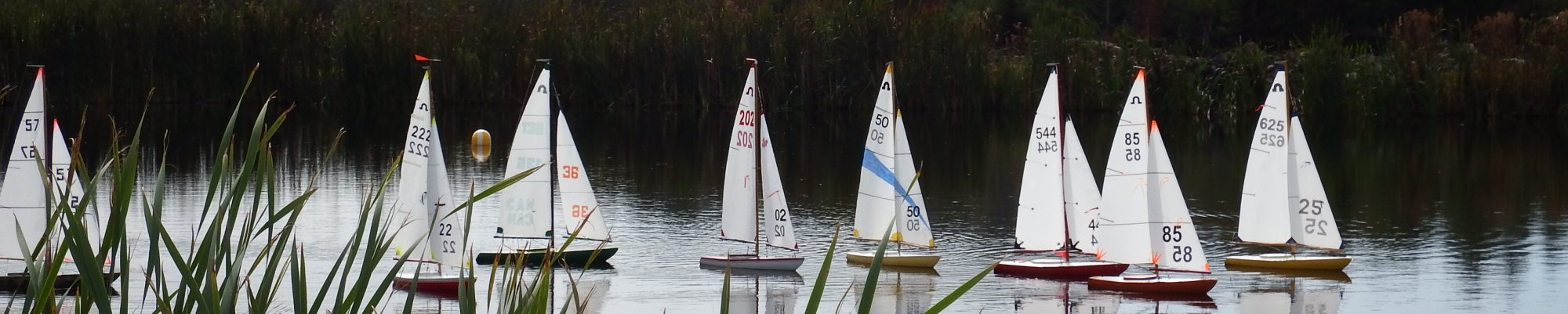

HAMYC STANDING
RACE INSTRUCTIONS
1 RULES
1.1 Races will be governed by the rules as defined in The Racing Rules of Sailing
(RRS), Appendix E for RC sailing, the Class Rules of the Soling 1m Class Association
and these Sailing Instructions.
1.2 Regularly scheduled racing will be sailed in the Soling 1m Class. To be considered
for awards skippers must be members of the Halifax Area Model Yacht Club (HAMYC)
and possess a properly displayed Canadian Radio Sailing Association (CRYA) sail
number.
2 CHANGES TO THE SAILING INSTRUCTIONS
2.1 Oral changes to these Sailing Instructions may be made at any time by the Race
Director (RD). All competitors shall be notified. This changes rule 89.2(c).
3 SCHEDULE OF RACES
3.1 Regularly scheduled racing will occur Thursday Evenings between 1800 and 1900
and Sunday afternoons between 1300 and 1500 at Sullivan’s Pond in Dartmouth.
3.2 If racing is cancelled on a particular day an Email/Facebook Notice will be sent out
before 1000 on the day concerned.
3.3 The scheduled time of the Preparatory signal for the first race is 1800 on Thursday
evenings and 1300 on Sunday afternoons.
3.4 The race director will determine the number of races for each day after considering
weather, course and equipment conditions. No race shall start after 1900 on Thursday
evenings and 1500 on Sunday afternoons.
4 RACING FORMAT
4.1 All competitors will race as one fleet.
5 THE COURSE
5.1 The course will be chosen by the RD to suit existing conditions and orally described
by the RD using existing fixed marks.
6 THE START
6.1 A one-minute starting sequence will be used. The “Preparatory” signal is defined as
when the auditory sequence begins; the “Warning” signal is defined as when the one
minute countdown begins. This changes rule E3.5. 2
6.2 OCS (on course side) If any part of a boat’s hull or equipment is on the course side
of the starting line at the start the line judge [or RD] will attempt to hail that boat. Failure
of the line judge [or RD] to make a hail or a skipper to hear such a hail will not be
grounds for a Protest, or request for a redress hearing. This changes Rule 62.1(a).
6.3 A boat may not enter the starting area by crossing the starting line from the course
side after the Warning Signal. ‘Dip Starts’ are not permitted.
8 HOLDS
8.1 Prior to the Warning Signal, a skipper may request that the Race Director delay the
starting sequence for five minutes for the repair of a technical problem or breakdown.
8.2 When such a delay is granted, it will be announced and the Warning Signal will not
be sounded until the expiration of five minutes from the commencement of the delay.
8.3 Each skipper may be granted one such delay per day. Delays may not be stacked.
8.4 No hold will be granted if the delay results in the failure to start a race under 3.4
above.
9 PENALTY SYSTEM
9.1 A boat touching a mark as defined by Rule 31.1, shall take a penalty turn as
required by Rule 31.2.
9.2 A boat breaking a Rule in RRS Part 2, shall take a one-turn (360) alternate penalty
as required by Rule 44 and modified by E4.4.
10 PROTESTS
10.1 A boat protesting another boat, while sailing, shall hail the other boat, as required
by Rule 61.1(a) as modified by Rule E5.2.
10.2 No formal protests will be entertained. Failure of the contesting skippers to work
things out on the water will result in the disqualification of both parties.
11 SCORING
11.1 The Low Point System described in RRS Appendix A shall be used.
11.2 The score for one Race shall be discarded after completion of 5 Races, two
Races after completion of 10, three races after completion of 15; and so on every 5.
11.3 Every effort will be made to collimate the results and produce monthly series
scoring for the Thursday and Sunday regular series racing. Results will be presented
on the HAMYC Webpage and acknowledged at the HAMYC Annual General Meeting.
11.4 In order to be included in the monthly series scoring the racing for a particular day
must include at least 4 skippers sailing at last 3 races.
12 EQUIPMENT AND MEASUREMENT CHECKS
12.1 A boat and her equipment may be inspected at any time for compliance with Class
Rules and sailing instructions.
12.2 If any measured equipment is found to have been modified, the skipper involved
will be scored “DNS” for all races to the point when the modifications were discovered
in the regatta.
From the Dot.com notebook:
Afternoon folks,
Just back from our small boat club AGM, prize awards and Elections. Fun time!While I’ve been Commodore , serving for six years in the past, this year I volunteered to serve as Vice Commodore. I see my role to support our new Commodore Brian Luger and promote the club by attracting both new members and former members or reclaim inactive boats. I might add that boats now cost four times what they did 15 years ago when I started model yacht racing.
Last year we hosted the National Championships, won again by Jim. In addition, our club spearheaded the Canadian team in Stowe Vermont and for the first time we won the Can-Ams, so we get to host this championship in 2025, and I’ll be a part of that.
We had a great meeting, special thanks go out to the former hard working executive. The meeting was held at the Parkside Pub and Smokehouse and the food was great. Mary is seen ogling her newly arrived “Boss Hog” entree, she particularly enjoyed the southern bbq sauce and cornbread side as well as the home cut fries. Smothered under the cole slaw topping is the smokehouse sausage. I really liked my “Messy Piggy ” offering in the next picture, especially the Tennessee Bourbon sauce and thin onion rings over the smokehouse, very flavourful pulled pork. The fries were delicious but about six times the amount I can eat, where is my grandson when I need him?
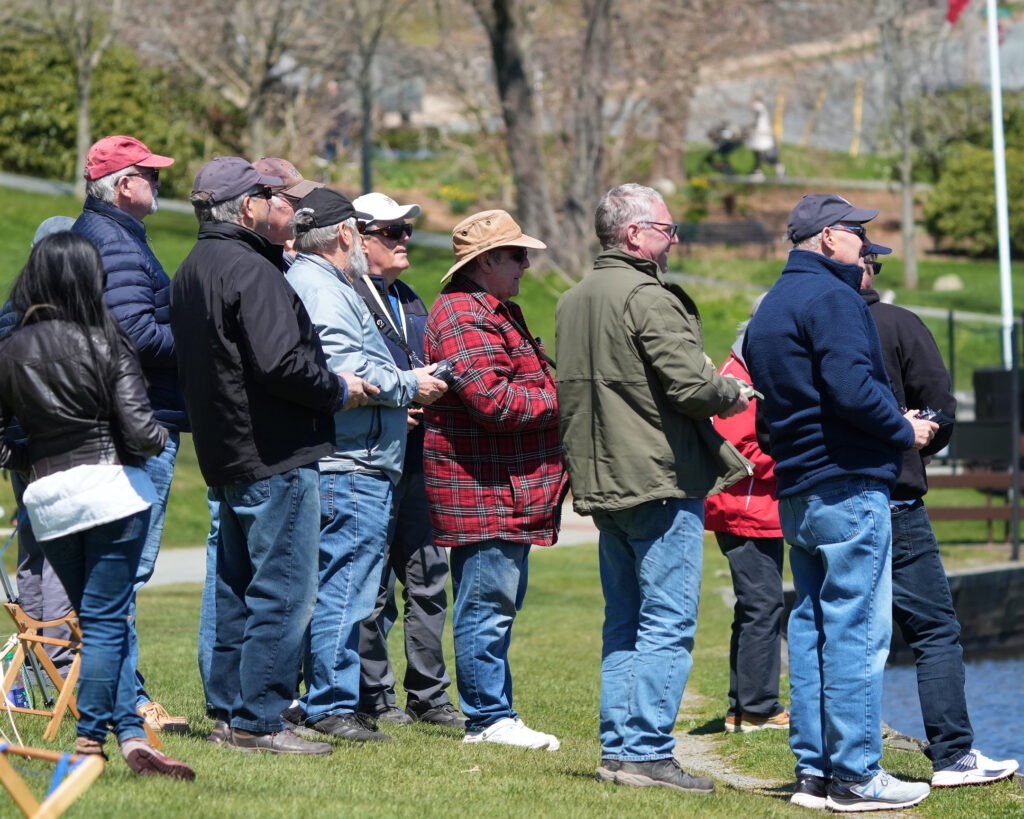
The next picture is of some of the members discussing businesses with pleasant barbs, not unlike what we hear at the pond which makes the club so much fun.


Two days of beautiful weather, and some close racing combined to make our Opening Regatta a huge success!



Halifax Area Model Yacht Club
2024 Soling 1M Canadian National Championship
June 15 and 16, 2024
Register today for the upcoming Soling 1M Canadian National Championship Regatta!
Join us for two days filled with close races, friendly competition, and a friendly East Coast experience.
Whether you’re an experienced skipper or a novice sailor, there’s something for everyone at our regatta.
Follow the link to download the Notice of Race and forward your entry and etransfer for the fee to halifaxareamodelyachtclub@gmail.com
| Mastering the First Windward Leg: Strategies for Successful Sailboat Racing Introduction: The windward leg is often the most crucial part of a sailboat race, setting the tone for the rest of the competition. Mastering this leg requires a combination of strategy, skill, and an understanding of the wind and how it interacts with the waters where the course is set. 1. Pre-Race Preparation: a. Study the Course: Before the race begins, carefully study the course layout, paying close attention to the position of marks, wind direction, and potential obstacles. b. Weather Analysis: Analyze weather forecasts and observe current weather conditions to anticipate wind shifts, gusts, and changes in pressure. c. Boat Preparation: Ensure that your boat is properly rigged, sail trim is correct, and the radio gear is functioning properly. 2. Starting Strategy: a. Positioning: Aim to start near the favored end of the starting line, considering wind direction and current. Avoid being trapped in a crowded or disadvantaged position. b. Timing: Time your approach to the starting line to gain maximum speed as the race begins. Avoid being too early (risking penalties) or too late (getting left behind). 3. Windward Leg Strategy: a. Sail Trim: Continuously adjust sail trim to optimize boat speed and pointing ability. Your pre-race preparation and tiller adjustments should deliver the perfect balance between power and efficiency. b. Tacking Technique: Execute tacks smoothly and efficiently, minimizing loss of momentum. Anticipate wind shifts and choose the best moment to tack based on tactical considerations. c. Strategic Tacking: Strategically position your boat to take advantage of wind shifts, favorable current, and clear air. Be ready to tack to maintain a clear lane and avoid getting pinned by other boats. d. Avoiding Distractions: Focus on sailing your own race and stick to your game plan. Avoid getting drawn into unnecessary conflicts or distractions with other boats. 4. Tactical Considerations: a. Laylines: Identify and sail the optimal laylines to reach the windward mark efficiently. Avoid overstanding or falling short of the mark by accurately judging wind shifts and current effects. b. Clear Air: Maintain clear air by positioning your boat to avoid disturbed wind from other boats. Use windward boats as indicators of wind shifts and tactical opportunities. c. Strategic Mark Rounding: Plan your approach to the windward mark well in advance, considering wind, current, and traffic. Aim to round the mark with speed and momentum to gain an advantage over competitors. 5. Observation: a. Observing Competitors: Keep an eye on competing boats to gauge their tactics and adjust your strategy accordingly. Be ready to adapt to changing conditions and competitor movements. Conclusion: Mastering the first windward leg in sailboat racing requires a combination of preparation, strategy, and on-the-water skills. By carefully analyzing the course, executing smart starting tactics, and employing effective windward leg strategies, you can position yourself for success in the race. Continuously refine your techniques through practice and observation, and always be ready to adapt to changing conditions on the water. |
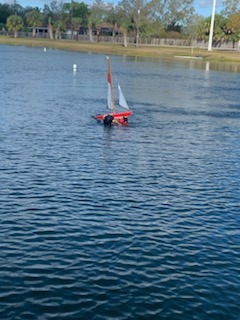

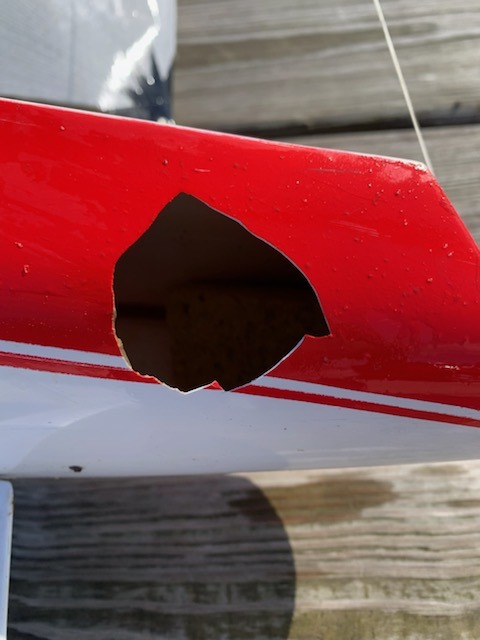
This is great example of what happens when a Soling gets hit hard when the winds are strong ie 17-18 mph , my boat sunk in 25 feet of water.
A diver was able to retrieve my boat a week later , needles to say a large hole , another crack was found near the rudder .
All the electronics were effective by the water exposure and will need to be replaced .
Repairs are under way.
Don McDermaid